
Film Mosaic archive

Character Dossiers

Character Dossiers studies the people who turn pressure into performance: fictional gamblers, thieves, detectives, fixers, con artists and protagonists whose certainty begins to fracture. Film Mosaic is an independent English-language luxury film review, cinematic analysis and media guide portal, examining casino cinema, crime thrillers, heist narratives and psychological drama from a strictly editorial perspective—not as an invitation to real-money gambling.

Each entry separates character intention from performance technique, then places both within screenplay construction, camera language and a film's moral temperature. We return to motivation, control, contradiction, physical detail, dialogue rhythm and narrative consequence. These are interpretive readings rather than definitive diagnoses, with routes into narrative breakdowns, production trivia and technical realism audits.

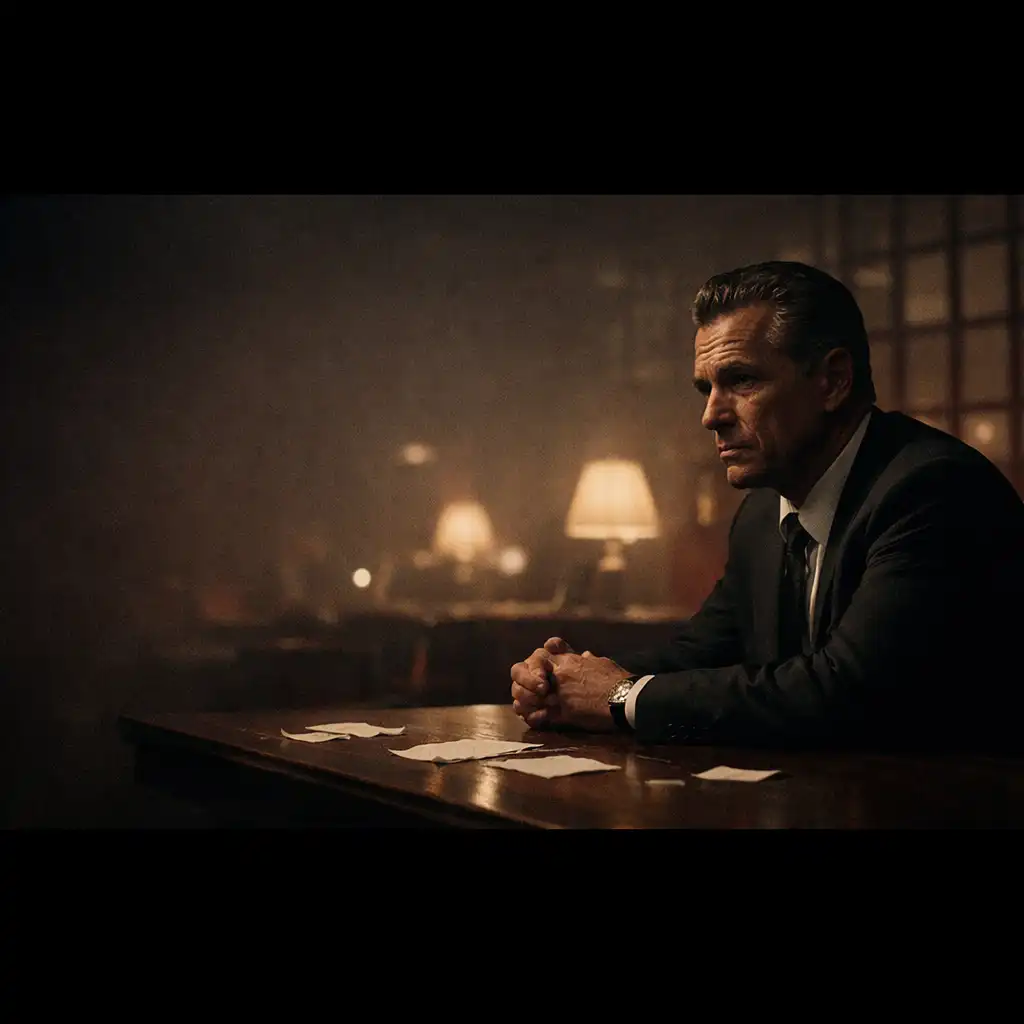
Editorially commissioned scene of an unnamed suited figure seated at a dark wood table in a private screening-room-like interior.

Featured dossier

Sam Rothstein: control as performance

Casino1995Martin ScorseseRobert De NiroCharacter analysis

01The public face of precision

In Martin Scorsese's Casino (1995), Sam “Ace” Rothstein is introduced as a man who wants every surface to be readable. Robert De Niro plays him as an operator attentive to routine, observation and correction: the casino floor becomes a cinematic system of labour, surveillance and ritual. The interest is not glamour but the effort required to keep a public order intact. Film Mosaic reads this setting as the film's depiction of a casino environment, where authority is staged through procedures that can never quite guarantee safety.

02De Niro's controlled volatility

De Niro makes Rothstein's composure feel rehearsed rather than effortless. Clipped speech, exact posture and moments of sudden escalation suggest a character who equates order with protection. His stillness is not calm so much as continual monitoring, and the vocal rhythm often lands like a correction already prepared in advance. That is a critical interpretation, not a diagnosis: the performance gives us a man whose confidence is compelling precisely because it appears to need constant maintenance.

Precision becomes most revealing when it begins to sound like self-defence.

03A screenplay built around erosion

Rothstein's dramatic force comes from the distance between operational mastery and private collapse. The screenplay turns routine, surveillance and conflict into an accumulating instability, without needing to reduce the character to one clean motive. Control is portrayed as fragile and costly: a useful method inside a system, but a poor substitute for certainty about the self. For a wider account of structure, reversals and point of view, visit Film Mosaic's Compare narrative breakdowns.

04Why the dossier remains useful

Rothstein endures because De Niro's performance refuses to turn technical skill into moral clarity. He is legible in procedure yet elusive in self-knowledge, making Casino a durable study in character construction rather than a display of expertise. Current New Zealand viewing options can change, so use the independent directory below to investigate legitimate routes without assuming a present listing.
Archive routes

Browse by dramatic pressure

Choose a dossier by the architecture of a character's pressure rather than by genre alone. These routes identify recurring screen behaviours and the cinematic questions they invite.

01

The strategist

Profiles of characters who build control through preparation, codes, routines and contingency plans—until another person or one miscalculation exposes the limits of their system. A route through crime, casino and heist studies.

Explore essential dossiers

02

The improviser

Profiles of characters whose social fluency, instinct and speed create momentum, while charm conceals a thin margin between adaptation and self-destruction. The emphasis is performance rhythm and dialogue.

Explore essential dossiers

03

The compromised professional

Profiles of investigators, operators and specialists who know their world's rules yet discover that competence cannot settle an ethical debt. Expect thriller and noir-adjacent criticism shaped by consequence.

Read the method

04

The unstable witness

Profiles of narrators and observers whose perception shapes what an audience can trust, making performance and point of view inseparable. A path into psychological drama, proximity and withholding.

Read the visual essay

Curated shelf

Essential dossiers

Six entry points across crime cinema, heist films, performance culture and psychological pressure. These are editorial previews for the archive, presented as catalogue plates rather than promises of individual published pages.

Archival film canisters, screenplay pages and a desk lamp in an editorial screening room.

Casino · 1995 · Martin Scorsese

Sam “Ace” Rothstein

A study of Robert De Niro's meticulous casino operator, whose professional certainty becomes inseparable from personal exposure.

Archive preview
Archival film canisters, screenplay pages and a desk lamp in an editorial screening room.

Casino · Sharon Stone

Ginger McKenna

A study of Sharon Stone's Ginger McKenna, reading glamour, vulnerability and defiance as competing forces in the film's emotional economy.

Archive preview
Archival film canisters, screenplay pages and a desk lamp in an editorial screening room.

Ocean's Eleven · 2001 · Steven Soderbergh

Danny Ocean

A study of George Clooney's Danny Ocean, where relaxed charisma organises Steven Soderbergh's ensemble heist rhythm.

Archive preview
Archival film canisters, screenplay pages and a desk lamp in an editorial screening room.

Catch Me If You Can · 2002 · Steven Spielberg

Frank Abagnale Jr.

A study of Leonardo DiCaprio's Frank Abagnale Jr., tracing movement, charm and reinvention against pursuit and loneliness.

Archive preview
Archival film canisters, screenplay pages and a desk lamp in an editorial screening room.

Almost Famous · 2000 · Cameron Crowe

Lester Bangs

A study of Philip Seymour Hoffman's Lester Bangs, whose exacting critique and theatrical candour define a cultural gatekeeper.

Archive preview
Archival film canisters, screenplay pages and a desk lamp in an editorial screening room.

Le Samouraï · 1967 · Jean-Pierre Melville

Jef Costello

A study of Alain Delon's Jef Costello, reading restraint, repetition and image-making in Melville's spare crime classic.

Archive preview

Critical method

Reading performance

A dossier is not a synopsis or an actor ranking. It attends to the choices a performance makes and the cinematic conditions that give those choices meaning.

01

Voice and tempo

Performance begins with timing: pauses, interruptions, pace and the degree to which a character seems to be speaking for an audience, an opponent or themselves. Dialogue rhythm can expose control, evasion or fatigue without making the reading inaccessible to non-specialists.

02

Physical vocabulary

A dossier tracks posture, stillness, gaze and the use of space, asking what the body discloses before a screenplay supplies explanation. Blocking and camera distance shape that evidence, without turning observation into a clinical claim.

A body can hold a scene before it explains itself.

03

Screenplay pressure

Characters become vivid when their methods meet resistance: another will, an institution, a past decision or an image of themselves they cannot maintain. This lens considers narrative position and stakes alongside Film Mosaic's Plot Breakdowns.

04

The frame's complicity

Camera placement, cutting, costume, production design and sound can flatter, expose or withhold a character. Performance criticism must therefore consider the larger cinematic machine around the actor, including the perspective offered by technical realism audits and Trivia & Essays.

Visual essay

Character and camera

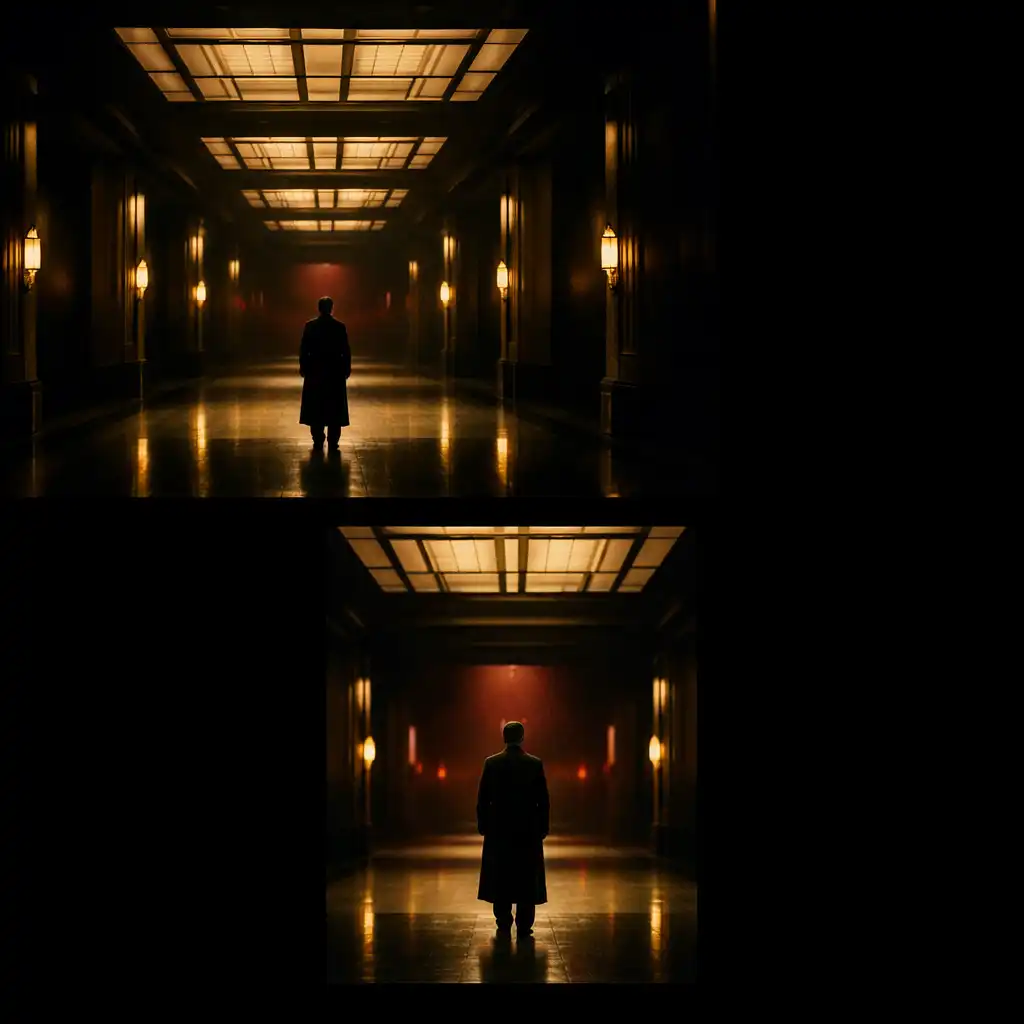
Editorially commissioned image of an unnamed solitary figure beneath a high ceiling in an art-deco corridor.

01

Distance can create authority

Wide compositions can make a character appear composed within a system, while revealing how small they are inside the rooms, institutions or landscapes they claim to command. Framing is an interpretive tool, not an aspirational picture of power.

02

Close-ups can become evidence

A close frame may bring us near a face without delivering certainty. In psychological drama, proximity can make restraint, discomfort or calculation more visible, especially when editing and duration refuse an easy answer.

03

Colour grades the moral weather

Muted metals, dense blacks and warm interruptions can register aspiration, decay or self-invention before dialogue identifies the feeling. A dossier reads design alongside performance, without treating colour as a fixed code.

Editorially commissioned cinematic scene; it is not a film still and does not depict a named character.

Editorial route

A character-led night

A suggested route, not a canonical order: begin with ensemble ease, then move toward pressure, mobility and withholding.

01

Ocean's Eleven

2001 · Steven Soderbergh
George Clooney as Danny Ocean

Start with Steven Soderbergh's ensemble heist film to see how Danny Ocean creates calm at the centre of a movie built from pace, collaboration and surface confidence. Its character chemistry makes an accessible opening for looking closely at ensemble timing.

02

Casino

1995 · Martin Scorsese
Robert De Niro as Sam Rothstein

Then turn to Casino for a more corrosive study of authority, where Robert De Niro makes professional competence feel both impressive and increasingly precarious. The film contains mature themes and rewards attention to its changing pressure.

03

Catch Me If You Can

2002 · Steven Spielberg
Leonardo DiCaprio as Frank Abagnale Jr.

Use Steven Spielberg's film to compare a more mobile form of performance. Leonardo DiCaprio's Frank Abagnale Jr. changes posture, accent and social role within the movie's fiction, contrasting movement and charm with pursuit and loneliness.

04

Le Samouraï

1967 · Jean-Pierre Melville
Alain Delon as Jef Costello

Finish with Jean-Pierre Melville's spare crime classic, where Alain Delon's Jef Costello turns withholding into a complete screen language. Silence, framing and repeated gesture ask the viewer to read precision without easy access to motive.

Independent directory

Check New Zealand availability

Availability changes; the directory is independent

Streaming, rental, purchase, 4K disc and cinema availability can change between services and regions. For a current New Zealand search, use JustWatch NZ, then confirm the final format and provider details on the relevant service. This link leaves Film Mosaic and opens a separate directory in a new tab; Film Mosaic does not control its catalogue, listings or pricing.

Film Mosaic provides critical context—why a performance, screenplay turn or visual decision matters—while the external directory helps locate legitimate viewing options in Aotearoa New Zealand.

Further reading

Continue the investigation

Take the character question into adjacent Film Mosaic criticism.

01

Prestige Reviews

Read full critical assessments that place performance inside direction, craft, tone and the larger question of whether a film's ambitions hold together.

Explore Prestige Reviews

02

Plot Breakdowns

Follow structure, reversals and point of view when you want to see how a screenplay turns a character's choices into narrative pressure without a spoiler-heavy recap.

Explore Plot Breakdowns

03

Trivia & Essays

Move into production context, technical realism and cinema culture for essays that widen the frame around the films and performances in this archive.

Explore Trivia & Essays

Archive invitation

Read characters as cinema

Return to the archive when a performance lingers after the credits: the most revealing character studies often begin not with what a person does, but with the image they are trying to preserve.

Find a film independently (opens in a new tab)